
爱玩客
China accelerates LEO satellite deployment with two launches in 12 days, but gap remains in launchpad efficiency, rocket reusability: expert_我的网站

一 | 当地时间2025年1月11日,美国加利福尼亚州恩西诺市,帕利塞德火灾在曼德维尔峡谷附近蔓延,一架灭火直升机正在空中洒水。视觉中国 图据央视新闻报道,美国洛杉矶县法医办公室1月12日确认,洛杉矶山火造成的死亡人数升至24人。过去两天,消防员利用风势减缓之际在控制火情方面取得进展。但气象部门预计13日开始南加州地区将迎来另一轮强风,火势有再度扩大的风险。
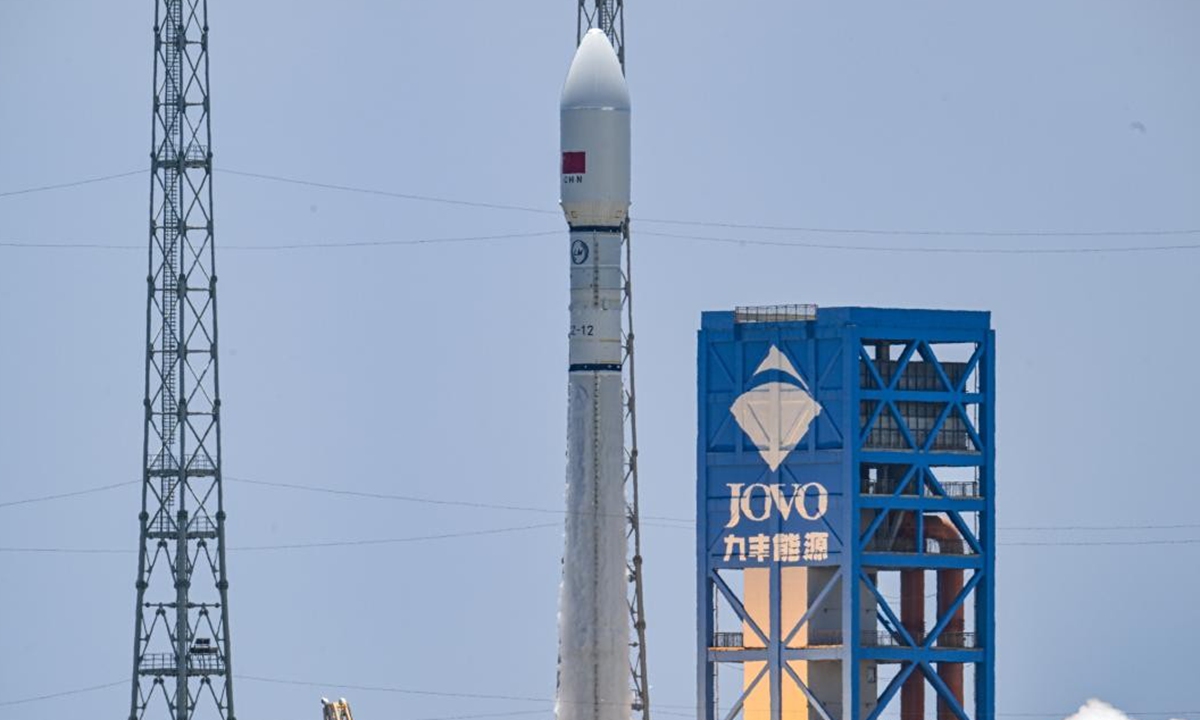
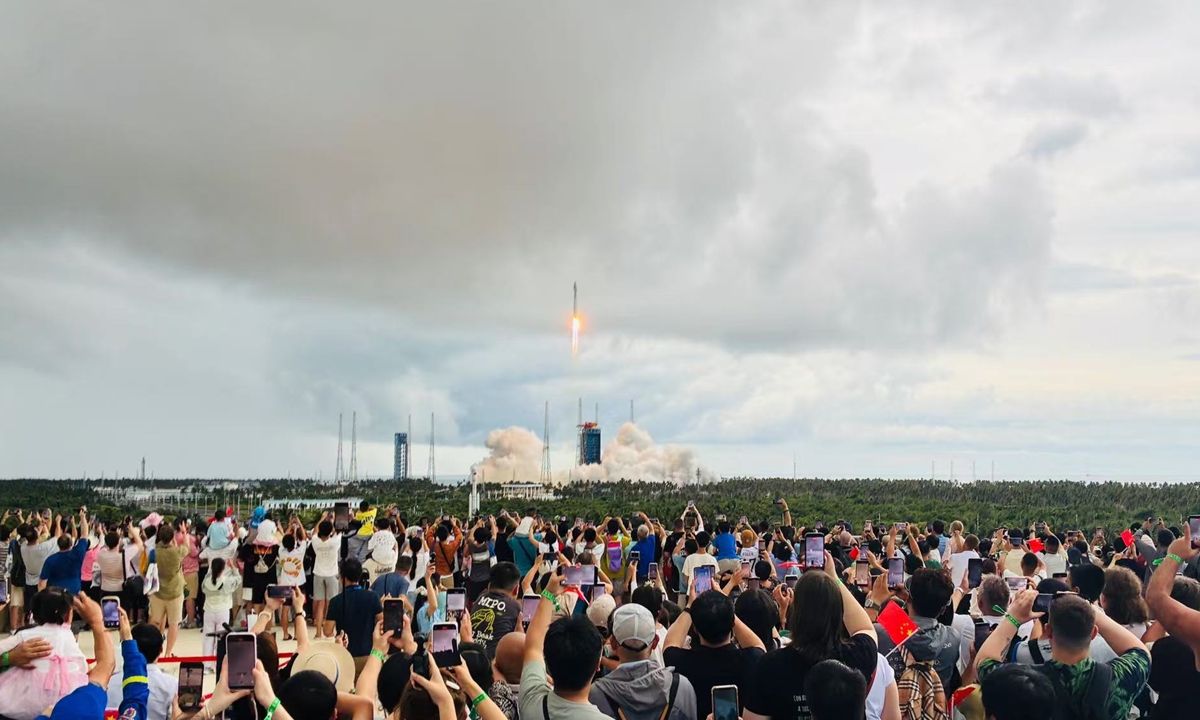
Two successful launches among China's recent frequent moves caught particular attention of space watchers - the 24th group of low-Earth orbit internet (LEO) satellites aboard a Long March-12 rocket was sent from a commercial spacecraft launch site in the southern island province of Hainan on Sunday, 12 days after the 23rd group of LEO satellites aboard a Long March-8A rocket was launched from the same Hainan site on August 4.
Sunday's mission marked the 663rd launch of the Long March series of carrier rockets, which on Monday sent an SEO satellite into preset orbit, per Xinhua.
Experts said the launches of two groups of LEO satellites within 12 days underlined that China is notably accelerating its pace of building its satellite internet constellation.
"The launch of LEO satellites has now entered a regular and cyclical rhythm, with batches of satellites continuously being sent into orbit at relatively stable intervals," Kang Guohua, a senior member of the Chinese Society of Astronautics and a professor of Aerospace Engineering at Nanjing University of Aeronautics and Astronautics, told the Global Times on Monday.
China launched the first group of LEO internet satellites on December 16, 2024, proceeding to the 24th batch in about 20 months. Kang said three major production and launch "assembly lines" are supporting the effort: satellite factories featuring centralized design in Beijing, coordinated supply chains and mass production; rockets with streamlined launch and testing procedures and multiple configurations; and launch sites capable of supporting routine constellation deployment.
The Long March-12, which played a key role in the latest LEO satellite launch, is China's first 4-meter-class single-core-stage carrier rocket and was specifically developed for commercial launch needs. It is about 62.6 meters long, has a liftoff mass of 430 tons and can carry more than 12 tons to low-Earth orbit. Its first stage is equipped with four 1,250-kilonewton pump-fed liquid oxygen-kerosene engines and uses a newly developed coal-based aerospace kerosene, according to Shanghai Academy of Spaceflight Technology.
The rocket adopts a "three-horizontal" launch preparation model: horizontal assembly, horizontal testing and horizontal transportation. Depending on mission requirements, it can use fairings with diameters of 4.2 or 5.2 meters and support both single-satellite and multi-satellite launches into different orbits.
"This flexibility makes the Long March-12 particularly suitable for the 'one rocket, multiple satellites' model required for constellation deployment, making it one of the main launch vehicles currently used for LEO constellation missions," Kang said.
The mission also highlighted the launch site's growing ability to support high-frequency launches. The rocket took only two and a half days from being transported to the launch area to liftoff, setting a record for the shortest time a rocket occupied the launch position at the site, Kang said.
Despite the rapid progress, experts cautioned that the 228 satellites currently in orbit remain some distance from the ultimate goal. China's satellite internet project has a long-term goal of deploying nearly 8,000 satellites and is now in an accelerated "weaving" phase.
China's advantage lies in its ability to control costs and boost production efficiency once satellite manufacturing reaches mass-production scale, another expert surnamed Liu told the Global Times.
"Whether it is the production capacity of AI centers or the factory in Hainan, which has an annual satellite manufacturing capacity of 1,000 units, satellite production itself is not the problem," Liu said. "More bottlenecks lie in the operational efficiency of launch pads and the rocket payload and recovery technology."
The real challenge lies in rocket reusability. Only by lowering launch costs and increasing launch frequency can China sustain a pace of more than one launch per week. This is also the strategic significance of accelerating the development of reusable rocket technology, including the Long March-10B and privately developed rockets, Kang further noted.
Chinese Academy of Engineering academician Deng Zhongliang previously said in an interview that satellite internet will serve as an indispensable space-time infrastructure for 6G, enabling emerging industries worth trillions of yuan, including the low-altitude economy, advanced autonomous driving and the Internet of Things (IoT).
。

二 | 据路透社报道,加州州长加文·纽森称,就造成的损失而言,此次洛杉矶大火可能是美国历史上最具破坏性的自然灾害,已造成上万所房屋被毁,10万人被迫撤离。美国气象网站AccuWeather估计,整体经济损失可能达到1350亿至1500亿美元。尽管消防人员全力救火,大火在强风的推动下仍在扩大向东北部蔓延,目前已经烧到曼德维尔峡谷社区,并往盖蒂中心艺术博物馆所在的高档社区布伦特伍德延烧,人口稠密的圣费尔南多谷也岌岌可危。

三 | 盖蒂中心收藏着一些艺术界最珍贵的珍品,例如文森特·梵高的《鸢尾花》、广受欢迎的伦勃朗的作品以及跨越七个多世纪的无价绘画、肖像画和其他作品。目前,由于大火威胁,盖蒂中心所在的地区已经下达疏散令。加州大学洛杉矶分校校园已进入高度戒备状态,消防当局建议校方做好疏散准备。该校教授张作风告诉澎湃新闻(www.thepaper.cn),“目前我们住的地方安全,但是在学校里可以看到远距离的山火。这两天学校取消本科课程,并将研究生课程转为远程教学。”美国国家气象局称,预计洛杉矶和文图拉县的风势将在13日晚至14日早再次加剧,阵风时速可能高达110公里;大火可能进一步蔓延,或许还会发生新的火灾。州长纽森已部署1680名国民警卫队人员参与救火。俄勒冈州、华盛顿州、内华达州、亚利桑那州、得克萨斯州和蒙大拿州等州也为加州野火救援工作提供资源。根据洛杉矶县法医办公室公布的死亡名单,截至11日大火已致24人死亡;消防部门确认还有数人失踪。官员们预计这一数字还会上升。

四 | 洛杉矶县官员称,过去一周火灾烧毁的面积总计已经比旧金山、匹兹堡、波士顿或迈阿密的市区面积还要大。至少超过12000座建筑被烧毁。这些建筑物既包括房屋,也涉及汽车和附属建筑。由于许多人在大火中失去家园,洛杉矶未来几个月的租房需求势必高涨,租房者的财务压力恐怕也会加剧。澎湃新闻记者 刘栋(本文来自澎湃新闻,更多原创资讯请下载“澎湃新闻”APP)。
Current article:http://ycs3.xuebenwagangqingre.buzz/list_wyfykqh/9rar5s.html
Published on:06:57:36
栏目相关
- 阿里巴巴港股上市以来首次启动新股配售!总金额800亿港元,所得款项净额将100%用于投资全栈AI能力
- 枪支法又要修订,联合政府打算怎么改?
- MAMA Awards 2025 Day 1: ROSÉ and Bruno Mars' APT Wins Big With Major Category Sweep
- 学习快评丨树立和践行正确政绩观必须久久为功
- 平野紫耀「プライベート店訪問」インスタ投稿削除にファンショック “机オークション騒動”後には意味深発言も
- 别焦虑!90%的跑者,这辈子都跑不进3小时
- 解读“机器人组装机器人”:从实验室走向真实工业部署的跨越,解读“机器人组装机器人”:从实验室走向真实工业部署的跨越
- 夸梅:20年湖人季后赛浓眉一度6项数据领跑全队
- Grand Theft Auto V 传承版 粉丝利用数字取证专业知识揭露 GTA6 泄露者的加密货币骗局
- 泽连斯基这下麻烦大了,一女子竟当众下跪,直接扯下基辅“遮羞布”,靖欣评历史,原创 泽连斯基这下麻烦大了,一女子竟当众下跪,直接扯下基辅“遮羞布”
- 5部门对美团、滴滴等保障新就业形态劳动者权益开展行政指导_平台_企业
- 航司购票新增“超售让座,立减50” 真能解决超售难题吗?
热门排行
- 偷税超300万被罚后,初代网红温婉 “复活”:制售高仿大牌服装,近百个号带货超百万元
- 从小用AI的一代,连青春期也要外包吗?
- 纳指100收益更高,为什么新手还是该先买沪深300?
- France repatriates 40 children, 15 women
- 网易云音乐Mac 2.0版更新下载:新用户界面、音乐磁盘、心脏模式
- 侨银股份董事郭倍华个人名下持股减少72万股,涉及金额730.08万元
- 新研究表明北大西洋或正在接近一个新的“临界点”
- Himachal Disaster: 310 पहुंचा मौत का आंकड़ा, बाढ़ और भूस्खलन से तीन हजार करोड़ का नुकसान; 600 से ज्यादा सड़कें बंद
- 县领导深入乡镇检查防汛工作
- 7月末中国境内公募基金资产净值达39.11万亿元,7月末中国境内公募基金资产净值达39.11万亿元
- 直播+互动 YY探路元宇宙
- 【全环境立德树人】警察爸爸“趣”课堂 安全携手“筑”成长——市北区第九实验幼儿园家长进课堂系列活动集锦(二)