
河神
Third China-US Track 1.5 Dialogue held in Beijing as attendees discuss constructive strategic stability, practical cooperation_我的网站

A | 最近,国际货币基金组织(IMF)的一把手和二把手接连发声警告“灰犀牛”: IMF总裁“一把手”格奥尔基耶娃表示,私募信贷市场规模已突破2.3万亿美元,远超监管与数据监测能力,是她“夜不能寐的风险之一”。IMF报告指出,私募信贷基金的高杠杆、低透明度,可能成为下一轮信用紧缩的触发点。 同时IMF的“二把手”第一副总裁、前首席经济学家吉塔·戈皮纳特(Gita Gopinath)称美国股市如果崩盘,将可能引发比2000年互联网泡沫更严重、更全球化的经济危机。并称如果出现类似2000年的崩盘,美国家庭可能损失超20万亿美元,外国投资者损失约15万亿美元。 这两个看似独立的警告,实则指向同一条暗流:全球金融体系的脆弱性正在加深,而结果或是史诗级财富大重置。

B |
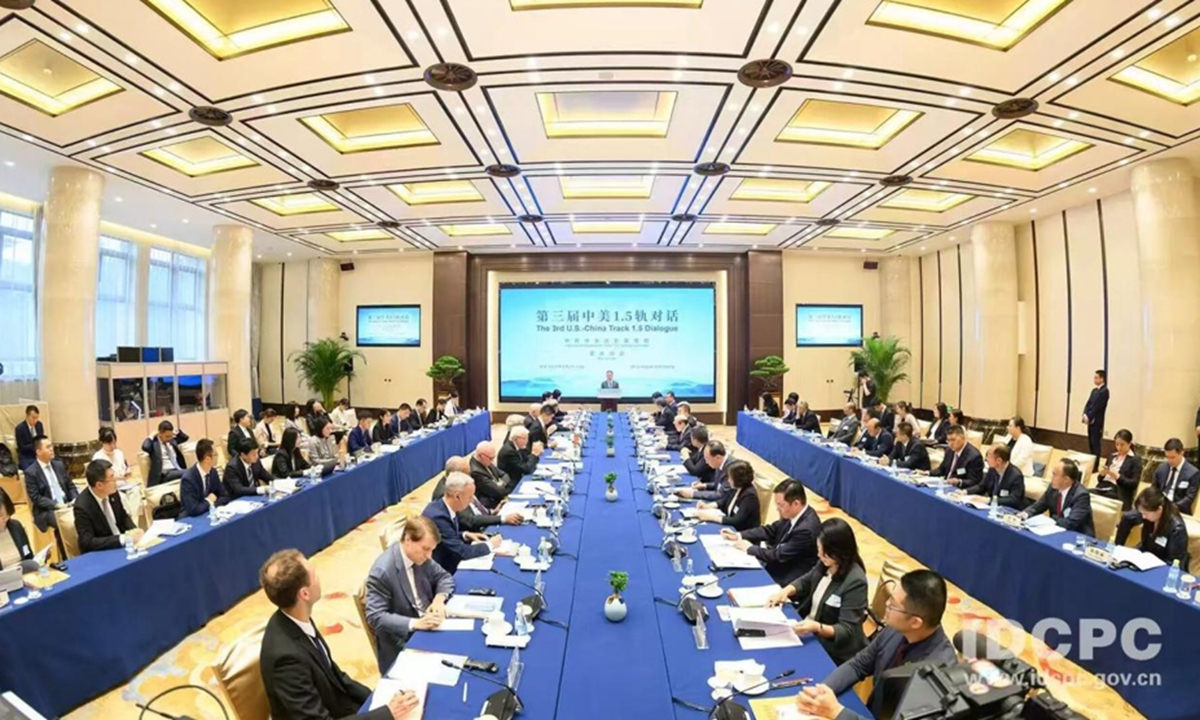
The third China-US Track 1.5 Dialogue was held in Beijing on Tuesday, bringing together government officials, scholars and business representatives from both countries for discussions on constructive strategic stability and practical cooperation.
Co-hosted by the International Department of the Central Committee of the Communist Party of China (IDCPC) and the Asia Society, the dialogue was attended by about 40 representatives. Participants included officials from relevant Chinese government departments and local governments, experts from think tanks and universities, as well as figures from US strategic and business circles, including John L. Thornton, co-chair of the Asia Society Board of Trustees.
Under the theme "Constructive Strategic Stability - Practical China-US Cooperation in the New Era," the participants held candid, in-depth and constructive exchanges, according to the IDCPC's release on its WeChat account on Tuesday.
Addressing the dialogue, Liu Haixing, head of the International Department of the CPC Central Committee, said the two sides have recently followed the direction set by the two heads of state, taken practical steps to strengthen communication and dialogue, advanced a positive agenda and achieved notable results.
Liu called on the two countries to continuously enlarge common interests and make cooperation the anchor of positive stability. He urged the two countries to uphold mutual benefit and reject zero-sum games so that competition remains within bounds, to seek common ground while managing differences, and observe the bottom line of no conflict and no confrontation to achieve lasting peace and stability.
Participants discussed ways to enhance political mutual trust, expand economic and trade cooperation, and explore cooperation in artificial intelligence, science and technology, CCTV News reported.
Established in 2023, the China-US Track 1.5 Dialogue operates between formal government-to-government diplomacy, known as Track 1, and purely nongovernmental exchanges, known as Track 2. The second dialogue was held on June 13, 2024, during which participants held candid, in-depth and constructive exchanges around the theme of "sharing perspectives and finding solutions on key and urgent issues."
As a channel involving both government and nongovernmental participants, the Track 1.5 mechanism can help China and the US communicate more effectively, identify common ground and better understand the consensus reached by the two heads of state, Zhou Mi, a senior research fellow at the Chinese Academy of International Trade and Economic Cooperation, told the Global Times on Tuesday.
It can also help translate the consensus into greater mutual understanding and concrete action, Zhou said.
Discussions on AI at this year's dialogue could help the two sides identify shared interests despite existing frictions and technological challenges, creating opportunities for practical cooperation and laying the groundwork for follow-up efforts, he noted.
Wang Yiwei, a professor at the Renmin University of China's School of International Studies, told the Global Times on Tuesday that the Track 1.5 dialogue serves as a bridge between Track 1 and Track 2, allowing participants to discuss sensitive issues and explore policy space while conveying frontline assessments and feasible proposals to decision-making departments.
Liu outlined practical pathways for China-US cooperation in the new era. First, the two sides should uphold mutual respect, peaceful coexistence and win-win cooperation, steer China-US relations to overcome the "Thucydides Trap," and create a new paradigm of major-country relations.
Second, the two countries should jointly shoulder their responsibilities as major powers, make constructive interaction an important driver of international cooperation, address global challenges together and inject greater stability into the world, Liu noted.
Third, they should expand exchanges and cooperation in trade, public health, agriculture, tourism, people-to-people ties, law enforcement and cooperation between localities, thereby strengthening the resilience of bilateral relations and working toward a better future, Liu said.
Overcoming the "Thucydides Trap" fundamentally rejects the notion that conflict between major powers is inevitable, Wang Yiwei said. It reflects an effort by China and the US to pursue a path different from the historical confrontation between an established power and a rising one.
Such a model does not seek to avoid competition altogether, but to ensure that competition has boundaries, differences remain manageable and cooperation retains sufficient space, Wang Yiwei said.
To put this approach into practice, the two countries should respect each other, avoid crossing red lines concerning core interests and reduce the risk of strategic miscalculation. They should expand areas where their interests converge and establish regular cooperation mechanisms on global issues such as climate change, public health, food security and AI safety, turning shared responsibilities into joint action, he noted.
As the world's two largest economies, China and the US should recognize that many global challenges cannot be effectively addressed without coordination between them, particularly at a time of intensifying competition. Constructive engagement is therefore not a temporary expedient but a long-term responsibility that major countries should undertake for the world, Wang Yiwei said.
The dialogue came a day after China's top political advisor Wang Huning met with US delegates attending the event in Beijing on Monday.
During their meetings, the US side said that the US-China relationship is at a special juncture, adding that the sound rapport between the two heads of state constitutes the most valuable and important part of bilateral ties. The US side agrees that both sides should act on the consensus of building a constructive US-China relationship of strategic stability, advance corporate cooperation, expand people-to-people and cultural exchanges, guard against risks such as those posed by artificial intelligence, and deliver benefits to both countries and the rest of the world, according to Xinhua.
。 IMF对股票崩盘严重性的估算 IMF的“二把手”第一副总裁、前首席经济学家吉塔·戈皮纳特(Gita Gopinath)公开表示: 若出现与互联网泡沫相当幅度的回调,可能会抹去美国家庭超过20万亿美元的财富,约相当于2024年美国GDP的70%…… 全球层面的后果同样严峻。

C | 海外投资者可能面临超过15万亿美元的财富损失,约为世界其他地区GDP的20%。 相比之下,互联网泡沫破裂时海外损失约2万亿美元,按今日价值约4万亿美元,占当时世界其他地区GDP的不到10%。 虽然上面提到的数字非常吓人,但是需要指出的是,吉塔·戈皮纳特(Gita Gopinath)的这段话不是一个“预测”,而是一个“情景分析”或更确切地说是“压力测试”: 其核心逻辑是:今天的市场规模和全球对美国资产的敞口远大于2000年,因此同等幅度的下跌将造成大得多的损失。 具体而言: 互联网泡沫破裂时(2000年~2002年),市场经历了巨幅下跌:以科技股为主的纳斯达克指数(NASDAQ)从高点到低点下跌了约78%;范围更广的标准普尔500指数(S&P 500)下跌了约49%。 当然以上都是从高点的最大下跌幅度,为避免用极端值,很多情景分析会取35%作为“互联网泡沫量级”的代表性回调幅度。 图:美联储最新统计的美国家庭资产负债表 如果按照目前的美国家庭股票持有情况来看,61万亿美元的35%大概就是20万亿美元;相比之下,2024年美国GDP总量为29万亿多点。 那海外的15万亿美元损失是怎么来的呢? 图:美国财政部统计的外资持有的美国证券存量 从上图中可以看出,截至2024年6月30日,外资持有美股大约17万亿美元。(之所以用了这么滞后的数据,是因为这已经是最新数据了。这个数据的发布时滞很长:截至2025年6月的数据,预计在2026年2月27日才能发布) 考虑到2024年6月30日标普只有5500点,而现在已经接近6700点,所以按照比例来算:17*(6700/5500)=20.71。 如果市值回调35%,外资在美股的损失大概是7万亿美元;另外8万亿美元将来自于美国崩盘向海外股市外溢造成的损失: 目前全球股市的总市值大概就是120万亿美元的水平,而美国自己就占了超过60万亿美元,在美国大跌的背景下,非美股市历史上也会联动下跌,但幅度通常低于美国本土。保守起见,即便外围股市跌个15%,这就差不多八九万亿了。

D | 这回真的跌不起 35%的幅度,实际上是正常熊市下跌的水平,但是这回真的跌不起。 因为这一次不仅仅是蒸发市值这么简单。 首先,这一次对消费的影响将非常严重。最近几年(2023~2025年),美国实际个人消费支出(Real PCE)同比大致在2.5%~2.6%附近,但在互联网泡沫前的90年代后期(1998~1999年):美国实际个人消费支出常见增速在4%~5%。 在目前牛市情况下已经非常疲弱的消费增速,是经不起熊市打击的,特别是现在的美国消费对股市依赖也越来越高的情况下,更是如此: 2022年以来高收入群体支出领跑并托住了美国总消费:美国前10%人群的消费现在占比接近一半,而这群人持股与金融资产占比最高,因而对股市最敏感。 主流研究估计股市财富每变动1美元,年消费变动约2.8~5美分,但在目前结构下,影响比例肯定会更高:如果美国股市蒸发20万亿美元,对消费的影响将是上万亿级别。 由于美国约70%的GDP都是消费,这个冲击量级足以把当年消费增速拉低数个百分点,从而把GDP增速压低约至少2个百分点。 关键问题是,这次可能不太好恢复。

E | 以往美国经济危机会出现大量“避险资金”来抄底:历史上,美元在危机时期往往走强,所谓“避险买入”有助于抵消以美元计价财富缩水的冲击。即便危机来源自美国,投资者也常常涌向美元资产,使美元升值。 但现在有理由认为下一次危机时这种机制未必奏效。 首先,市场对美联储的看法在维持投资者信心方面至关重要。然而,近期的特朗普对美联储的一系列操控和挑战,让人质疑美联储能否能继续不受外部压力干扰地运作。若此类担忧加深,可能进一步侵蚀对美元及更广泛美国金融资产的信任。 第二,与2000年不同的是,如今美国增长面临的逆风更为强劲:美国加征关税,以及全球经济秩序走向的不确定性上升;同时,政府债务处于历史高位,美国像2000年那样通过财政刺激来托底经济的空间也更有限。 第三、之前危机都是有全球力量在相互配合,共同走出危机;现在特朗普把人都给得罪了遍,下次危机更可能的范式是各人顾各人,甚至“落井下石”。 所以,如果这次美股市场崩盘,其后果不太可能像互联网泡沫破裂后的那样短暂且相对温和。如今面临的财富风险更大,而用于缓冲回调冲击的政策空间更小,结构性脆弱点与宏观环境都更为凶险。

F | 美股一旦崩溃,一个更加严峻、甚至是翻天覆地的全球性后果或将出现……。
Current article:http://ycs3.xuebenwagangqingre.buzz/43y/q727t.html
Published on:09:47:14
 花环夫人
花环夫人 魔女的条件
魔女的条件